
- Details
-
By Super Admin
- Category: Blog Community Outreach
- Hits: 201

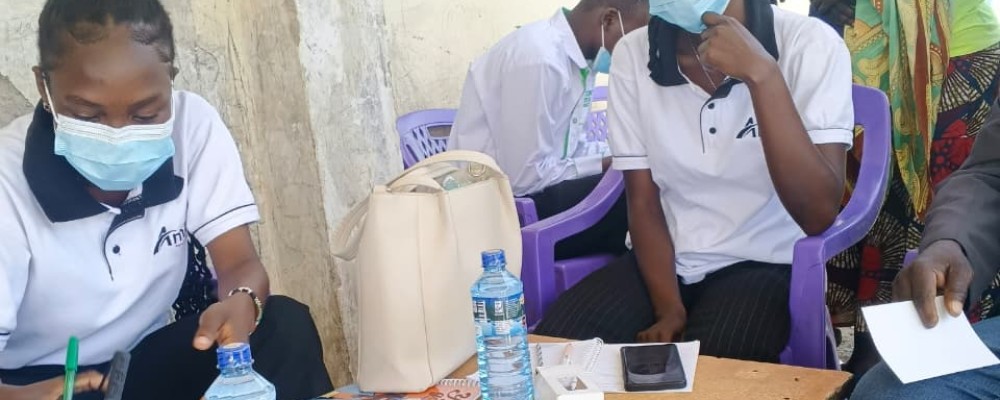
On 13th February 2026, we identified 4 out of 25 patients in urgent need of financial support especially because they do not have SHA. We were at Ombaka Dispensary, located in the Ahero area (Kakola/upper Kochogo North), a gazetted government Level 2 health facility serving the local community with primary healthcare, reducing the need to travel to Ahero Sub-County Hospital. It acts as a local hub for medical services, including outreach initiatives.
The Invite
In response to an invitation from Maxcure Hospitals Ltd.—a modern, 24/7 multispecialty tertiary-care hospital based at Mega City Mall (Kachok), Kisumu, and guided by a mission to improve patients’ quality of life by combining technology with human expertise, grounded in respect and compassion for human life—captured in its motto, “We Respect Life,” our fieldwork commenced promptly at 8:00 AM and continued through to approximately 6:00 PM.
By the time we were reaching the venue which was 2KM off the main highway, there were more than 400 patients waiting to be seen at the medical camp. We were a team of 12 Maxcure staff and 3 Amicus Staff and we immediately knew we were going to have a very busy day.
The Process
With over 400 people needing various kinds of help from SHA registration, to Medication as well as taking vital measurements. It was paramount that there was an order that needed to be followed to ensure as many people as possible had a chat with doctors and nurses from Maxcure Hospitals.
At a high level, this was the process:
-
Manual Queuing - Each patient was given a number for queuing for the initial triage session with the nurse where vitals were being captured for each patient
-
FREE Consultation - From the triage, patients would either go to the General Doctor or the Optician for a free consultation and diagnosis of various conditions. Depending on the diagnosis, certain recommendations were given by the doctor and later on medication was also provided
- SHA Registration & On-boarding - High risk patients with no SHA were then referred to Amicus Desk for support with SHA registration and onboarding of high risk patients onto our crowdfunding platform.
We repeated this process severally until all those who got numbers were seen by the doctors. We identified 4 emergency cases, 6 urgent cases and 15 routine cases. All of whom had not been registered in SHA. The 25 patients were recommended and endorsed for SHA Financing support through our crowdfunding platform by the doctors depending on the urgency.
The Challenges
1) Medical Financing
Majority of the patients had not registered on SHA and for the few who had registered they lacked finances to attend to care
2) Main Health Conditions
The top health conditions mostly affecting above 35 year olds were:
-
Diabetes and Hypertension,
-
Arthritis
-
Pneumonia
-
Lipoma.
2) Eye Care
There were also cases of recommendations of minor eye surgery.
Role of Amicus Desk
Amicus Desk had three support personnel from Amicus who were:
-
supporting patients register on SHA,
-
creating awareness of the importance of SHA registration,
-
On-boarding high risk patients onto the Amicus Crowdfunding platform
All in all, it was a very successful and as expected busy day that left us with 4 patients to fundraise for in the short term and 21 patients to continously monitor.
Our commitment
This day's experience is yet another realization that health crises are not caused by lack of medicine or hospitals—but by financing delays which interrupt care in a significant manner
We are building a verified, dignified, and accountable way for friends and partners to respond—fast.
This is how we identify high-risk patients and connect them to finance & care!
- Details
-
- Category: Blog Community Outreach
- Hits: 283
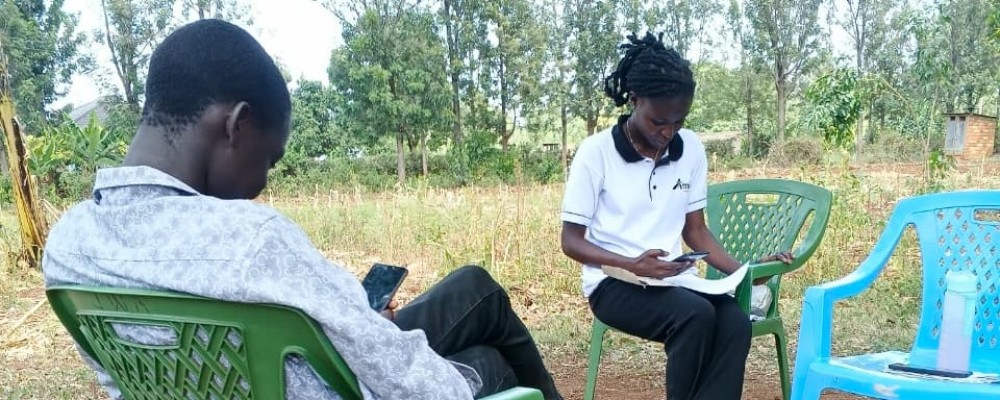
In Nyakach, Kisumu County, our community outreach came into a real, urgent use case, Calister W., a patient living with hypertension and diabetes.
The challenge we found
Calister had stopped consistent treatment in 2025 after being told she needed to pay for a full-year SHA subscription upfront before continuing care. The annual cost—KES 5,400—was beyond what she could afford at the time.
When we met her, she was visibly weak. Her husband had become her primary caregiver—managing most of the household tasks and daily support. Yet even accessing routine care remained difficult: the trip from home to the hospital requires transport (commonly a motorbike) and repeated visits. For families already struggling, these costs compound quickly, and health declines quietly while waiting for “when money is available.”
Nyakach and its surrounding areas are not short of goodwill. What’s missing is a trusted, fast, and accountable pathway for friends, communities, and partners afar to step in—especially for needs that must be resolved immediately to prevent complications.
What we are doing next: mobilizing Friends for Impact and donors
Calister's case makes the next task very clear: we must find the friends who can help—either through FriendsForImpact (FFI) rapid giving or through normal donations.
In this case, the urgent goal is straightforward:
-
Raise KES 5,400 for her SHA subscription so she can resume regular treatment and clinical monitoring.
This is exactly the kind of preventable delay we are designed to solve—where care is available, but the financing barrier interrupts treatment for chronic conditions that can become life-threatening when unmanaged.
How the program works end-to-end (Calister’s case)
1) Patient submits the Medical Endorsement & Support Justification Form
Calister (with support where needed) completes the Medical Endorsement & Support Justification Form, capturing:
-
the support requested (SHA subscription),
-
the clinical context (hypertension and diabetes),
-
and the expected impact of receiving timely support.
2) Doctor verifies and signs the endorsement
A licensed doctor within our partner network verifies the case and signs the form to confirm:
-
the medical condition is genuine,
-
the support requested is medically justified,
-
and the urgency and consequences of delay are clear.
This step is critical: it protects donors, protects beneficiaries, and ensures the program remains credible.
3) We onboard the beneficiary and configure a personalized chatbot
We then upload Calister’s verified details into the platform and configure a personalized beneficiary chatbot.
This chatbot is designed to:
-
answer questions based on verified medical records, on behalf of the beneficiary,
-
share information safely and consistently,
-
prevent harmful or invasive questioning,
-
and maintain dignity at all times—while ensuring only the truth comes out.
This is not just a technical feature—it is a mental wellness and privacy safeguard. Beneficiaries are already under strain. Giving blanket public access to their sensitive medical information can expose them to stigma, judgment, misinformation, or emotional harm.
That is why we restrict access:
-
The public does not get open access to personal medical details.
-
Only verified supporters and approved stakeholders can view case information—and only what is necessary.
4) Funds go directly to the provider—transparent and controlled
To ensure accountability and proper utilization, funds are not routed to uncontrolled personal channels.
Instead:
-
all contributions are tracked and channeled directly to the doctor/clinic/hospital pathway, aligned to the approved support justification.
-
the doctor/provider gets a real-time dashboard (Google Sheet) where they can see contributions instantly as they come in via M-PESA.
This structure builds trust because it shows clearly:
-
how much has been raised,
-
how close we are to the goal,
-
and that funds are applied where they are intended—toward care.
5) At 40% of the target, care begins as fundraising continues
Once the campaign reaches 80% of the target, we trigger the next step: the beneficiary is attended to while the remaining fundraising continues. This reduces harmful waiting time and helps prevent deterioration.
6) Completion and transition
Once the full target is reached:
-
the campaign is closed,
-
records are finalized,
-
and we move to the next beneficiary—using the same trusted process.
Why this is also an advocacy platform
Calister’s journey is not only about fundraising. It’s also about education and prevention.
Supporters can learn:
-
what hypertension and diabetes mean in real life,
-
why consistent treatment matters,
-
how delays and interrupted care increase risk,
-
and how small, timely support can prevent major complications.
In other words, donors don’t just give—they understand. That understanding builds stronger, more sustainable communities of impact.
Our commitment
Calister’s case is a reminder that many health crises are not caused by lack of medicine or hospitals—but by financing delays that interrupt care.
We are building a verified, dignified, and accountable way for friends and partners to respond—fast.
We are supporting Kenyans, one at a time.